H&M's "Conscious Collection" looks good on the label. Lawsuits, misleading claims, and unchanged production tell a different story.
The harder question
Is H&M fast fashion? Yes. But that's the easy question.
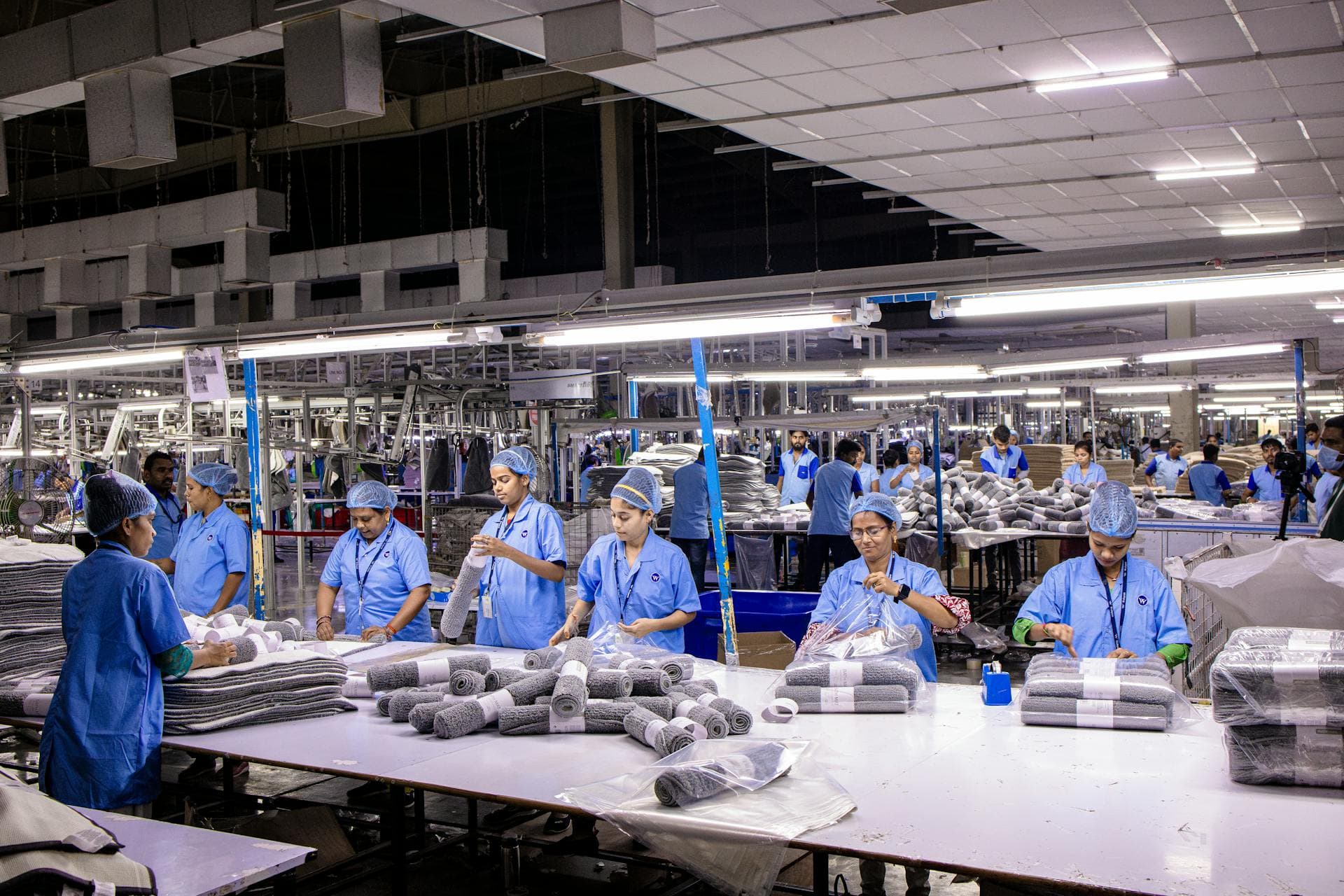
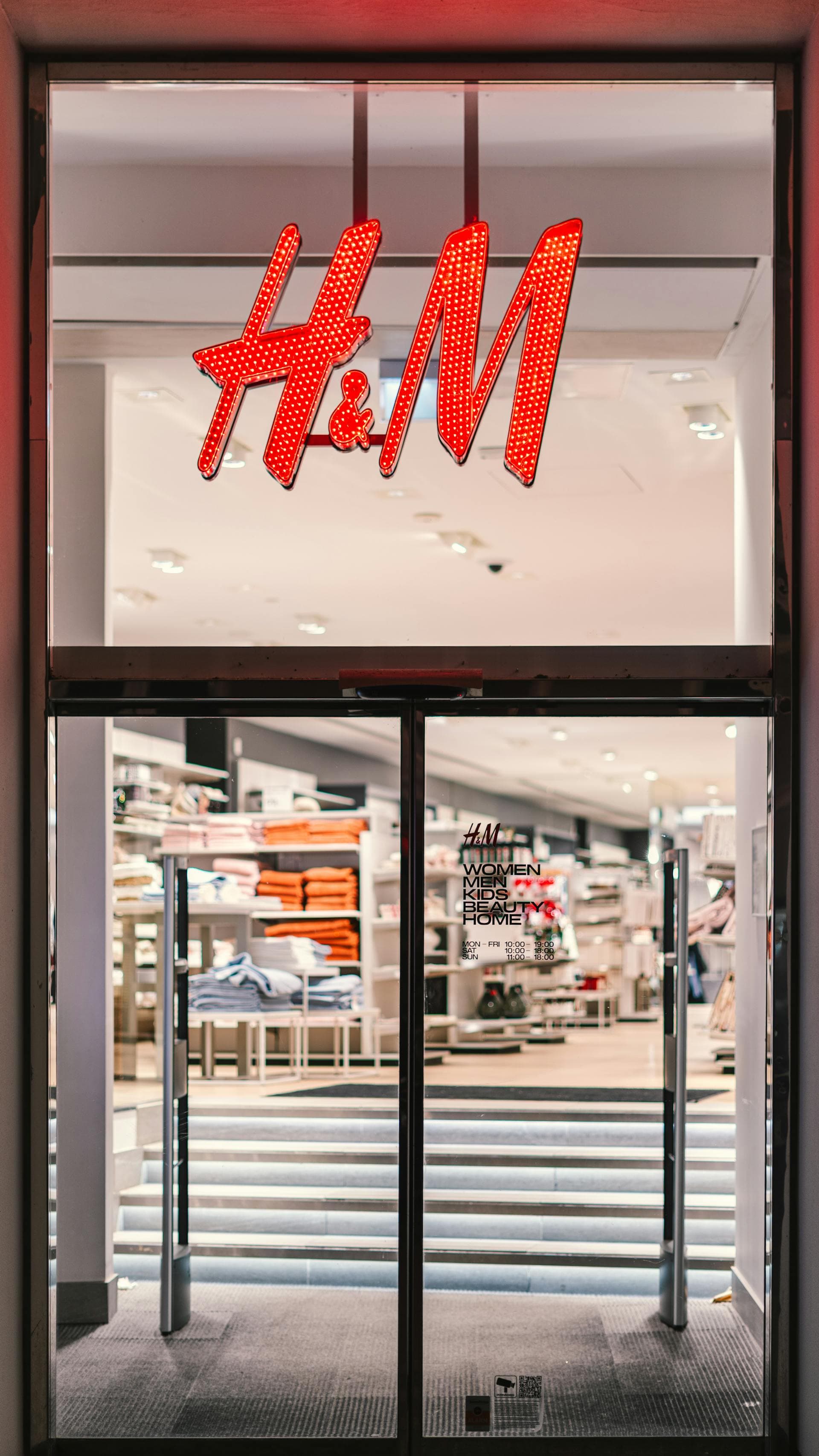
The harder one is why a fast fashion company works so hard to convince you it isn't. H&M wants you to know it cares about the planet. The company runs a garment-collecting program in every store. It publishes annual sustainability reports. It signs industry pledges. And it operates 4,000 stores and reported net sales of SEK 228 billion ($22 billion) in 2025.
You can do both things at once. Care, and not change. H&M has built a masterclass in that posture.
The greenwashing
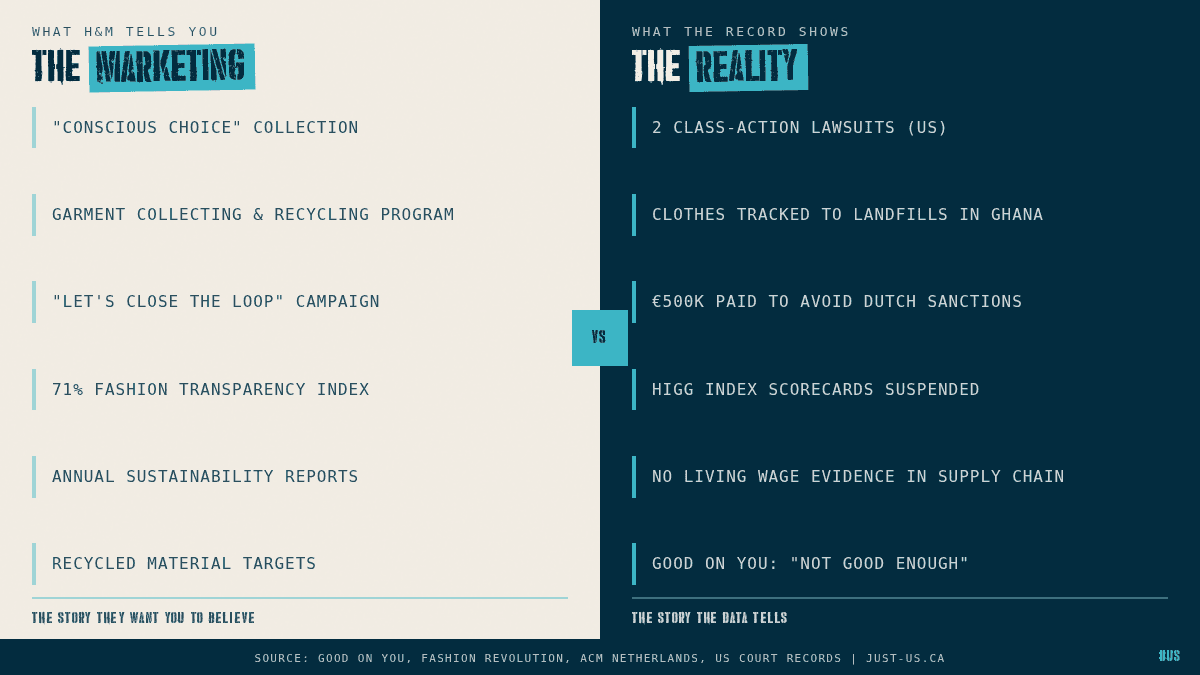
In 2022, H&M was sued in the US for its "Conscious Choice" marketing. The lawsuit alleged that the product scorecards H&M attached to Conscious items were misleading — in some cases showing that garments "saved" water they couldn't have saved, and in others reporting data that was simply fabricated. H&M paused the scorecards.
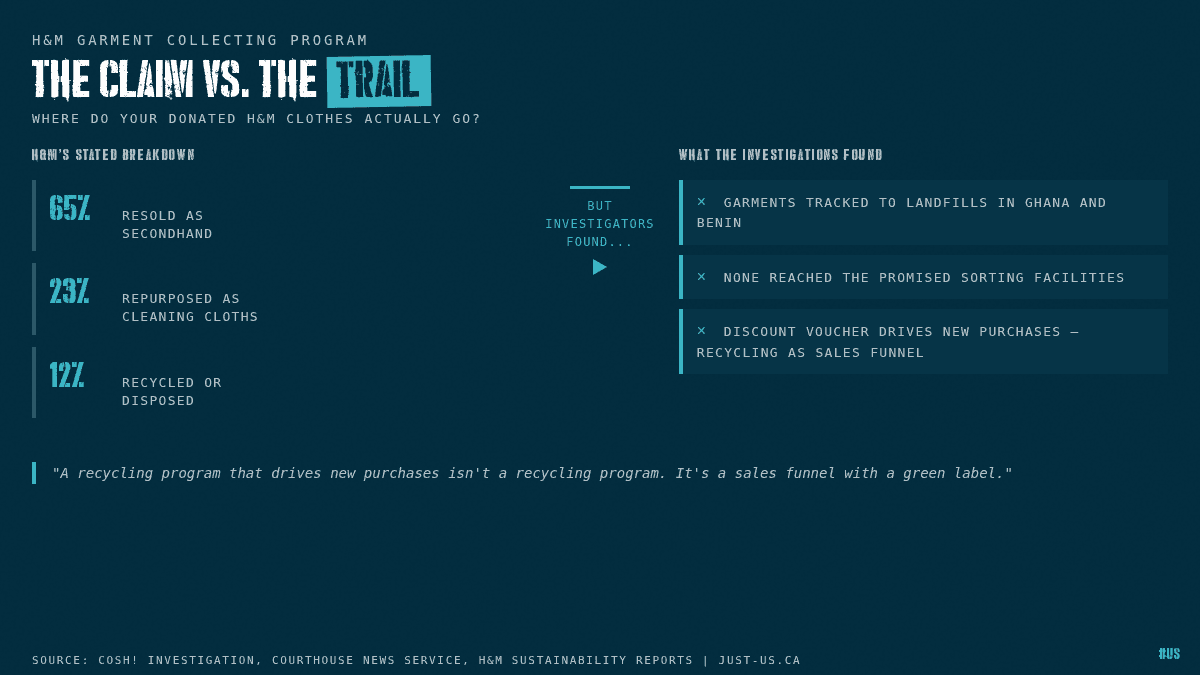
Then there's the Garment Collection program. Drop your old clothes in the bin at any H&M store, get a discount voucher for new ones. Sounds like a closed loop. Isn't. Investigations by Aftonbladet and the Changing Markets Foundation traced donated H&M items dumped in West African landfills. Fewer than 1% of garments collected were actually recycled into new garments.
A sustainability program that sends your old clothes to a landfill while selling you a voucher for new ones isn't a program. It's a marketing funnel.
Where the garments actually go
The Changing Markets Foundation put GPS trackers on 21 items donated to H&M's in-store collection bins. The trackers followed the garments across continents — from European stores to sorting facilities in Eastern Europe, then on to textile markets in Ghana, Kenya, and Togo. Several ended up in open-air dumps.
None of this is illegal. All of it is marketed as "recycling."
What to do instead
Don't drop your old clothes in an H&M bin and call it recycling. Sell or trade them to someone who will actually wear them. Or cut them up and use them as rags. Both are more circular than what the collection program does.
Don't buy new H&M because it's labelled Conscious. The label means "this item contains some proportion of recycled or lower-impact material." It doesn't mean the factory paid a living wage. It doesn't mean the garment will last more than ten washes. It's a marketing gradient, not a certification.
“PR department first. Factory floor much, much later.”