Quince promises ethical luxury at fast fashion prices. Is that actually possible?
The most complicated question
Is Quince fast fashion? It's the most complicated question in this series. Quince is different from every other brand here, and that distinction matters.
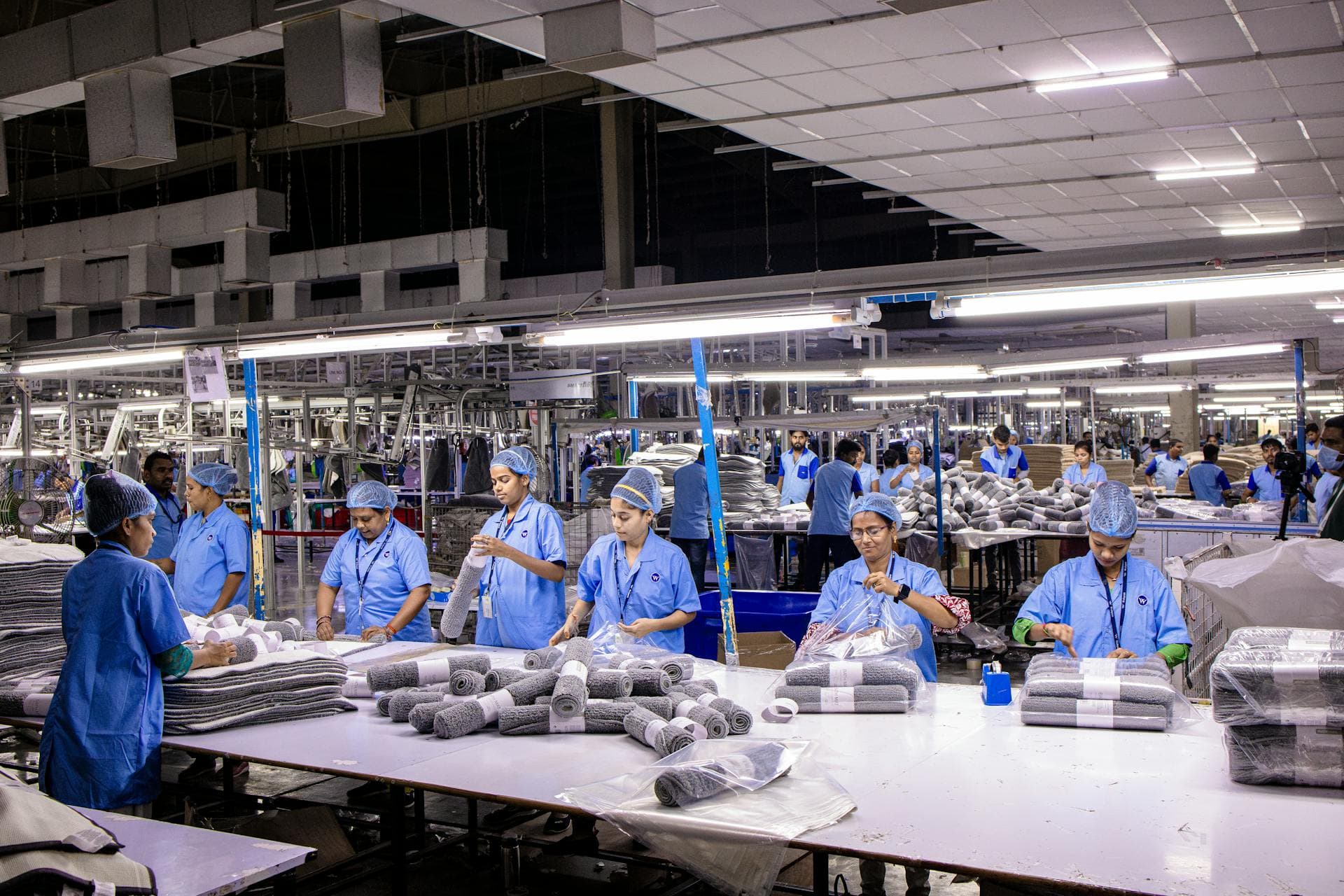
Quince operates a direct-to-consumer model that skips traditional retail markups. The pitch: the same factories that make luxury cashmere for $400 at other brands make it for Quince for $50. No middlemen, no physical stores, no inflated prices.
Where Shein hides behind algorithms and Zara hides behind speed, Quince built its pitch around transparency.
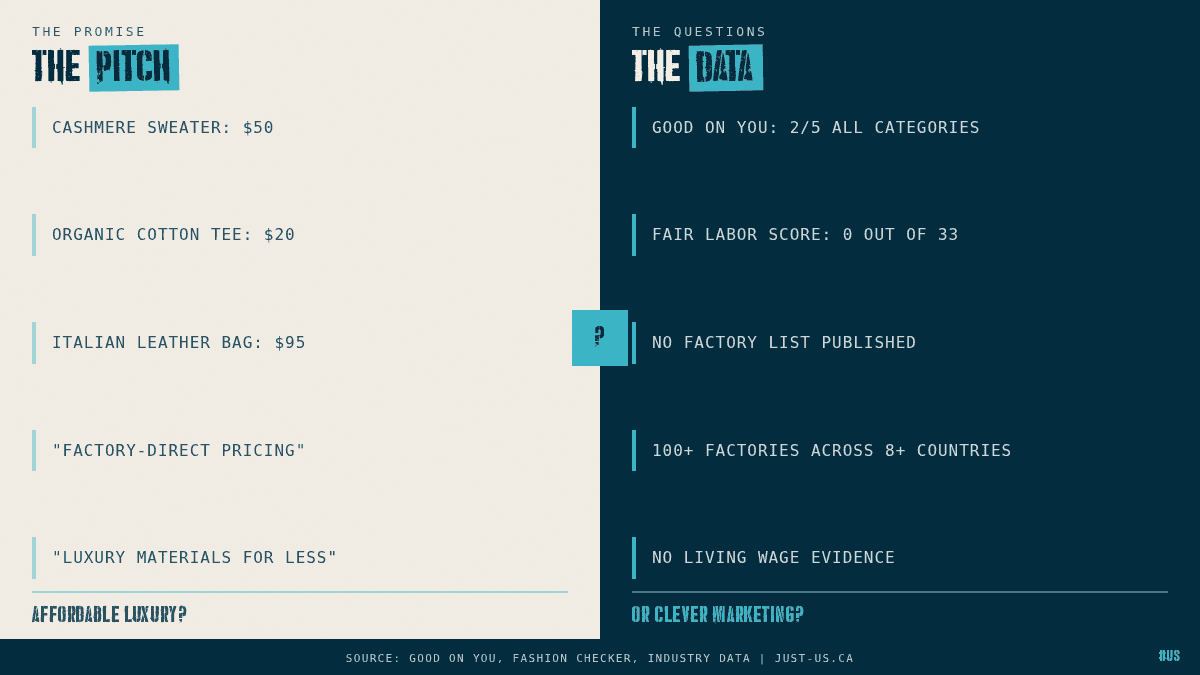
The transparency gap
Quince publishes marketing copy that references "the same factories as luxury brands." It doesn't publish the list.
Third-party auditors have no standing relationship with Quince. Good On You has no rating for the brand — typically a signal the brand hasn't engaged. Fashion Transparency Index score: not included.
In the absence of disclosure, all you have is the pitch. A $50 cashmere sweater is either a genuine breakthrough in supply chain design or a number that works because someone else is absorbing the difference.

When it might be OK
To be fair: Quince could be doing what it says. Cutting out retail markups is a real lever. Direct-to-consumer models do let brands sell cheaper without squeezing suppliers — in theory.
But "in theory" is how every clean-sheet ethical brand pitches itself. The proof is in third-party audits and open factory lists. Until those exist, the $50 sweater is a marketing artefact, not a supply-chain one.
What to do instead
If the pitch matters to you, write to Quince. Ask for the factory list. Ask for the audit.
Meanwhile, real transparent cashmere brands exist — smaller labels, usually family-run, who publish factories and mills and pay certified living wages. The sweater costs more. It also lasts decades. The math on "affordable luxury" rarely survives that comparison.
“A $50 cashmere sweater doesn't exist without someone absorbing the cost.”